 ChatGPT
 Perplexity
 Claude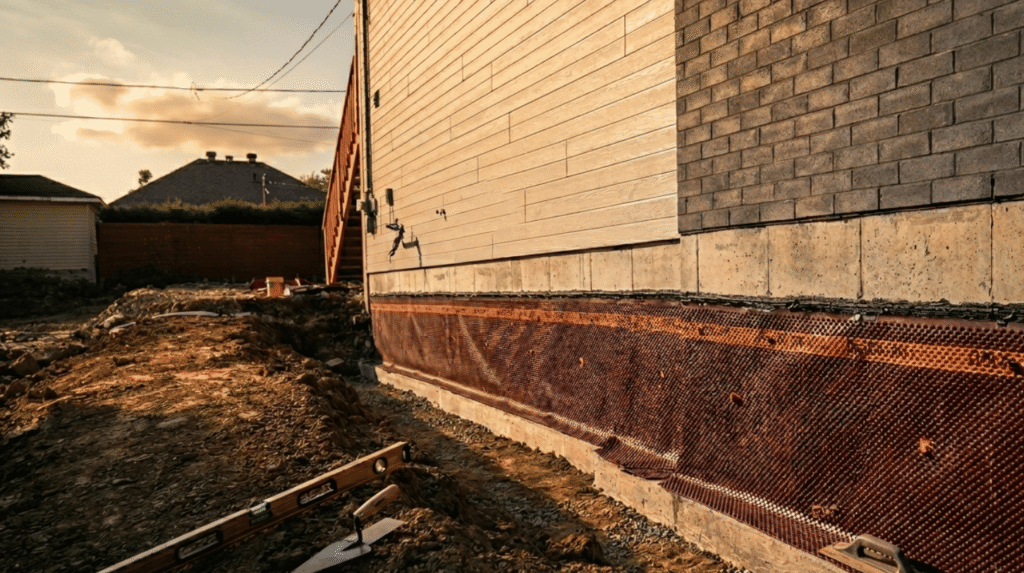
In Quebec, foundation replacement cost generally falls between $40,000 and $90,000 for a single-family home, and can pass $150,000 once house lifting becomes necessary. One clarification belongs right up front: replacing a foundation has nothing in common with repairing a crack. If your problem comes down to one or two cracks in the concrete, read our guide to foundation crack repair cost instead, where the amounts are counted in hundreds of dollars. This guide covers the structural job, partial or complete, whose invoice is counted in tens of thousands. Here are the indicative ranges in Canadian dollars for 2026, the factors that move them, and the exact point where repairing stops paying off.
How much does a foundation replacement cost in Quebec in 2026?
There is no single price: no two properties share the same perimeter, the same soil type or the same condition of existing foundation. The ranges below reflect the 2026 Quebec market.
Targeted repair, partial replacement or full replacement
The gap between the three levels of intervention is considerable. Indicative ranges in Canadian dollars, before taxes.
| Type of work | Indicative 2026 range |
| Targeted crack repair by injection | $400 to $2,000 per crack |
| Localized structural repair (repointing, steel anchors, support beams) | $3,000 to $15,000 |
| Partial replacement of a wall or a section | $20,000 to $45,000 |
| Full replacement, without lifting | $40,000 to $90,000 |
| Full replacement with house lifting | $100,000 to $150,000 |
| House lifting on its own | $35,000 to $100,000 |
A partial replacement demolishes and repours only the compromised section, keeping the rest of the perimeter in place. A full rebuild redoes everything, footings included, and usually calls for lifting the house on jacks and temporary steel beams.
Price by foundation type: poured concrete, concrete block or fieldstone
The original material weighs heavily on the invoice. Poured concrete is demolished and repoured predictably, closest to the averages. Concrete block tolerates spot fixes poorly once the joints open or the wall starts to bow, and tips toward a rebuild faster. Fieldstone, typical of older Quebec homes, calls for specialized labour: repointing the mortar costs far less, but once the stone has lost its load-bearing capacity, a rebuild becomes unavoidable and the price per linear foot climbs.
Repair or replace: the signal that tips the decision
Most problems are settled without a rebuild. A shrinkage crack, a cold joint that seeps, an isolated water infiltration: all of that falls under foundation crack repair and is handled for a fraction of the cost of a structural job. What matters is recognizing the limit. These five signals say it has been crossed:
- A foundation wall that bows, leans or has shifted horizontally
- Concrete crumbling deep into the wall, with delamination or exposed steel reinforcement
- Active structural cracks that reopen year after year despite repairs
- Visible settling: sloping floors, doors and windows that stick
- Footings that are too shallow or missing, sitting above the frost line
The real trigger is economic as much as technical: as soon as the cumulative cost of repeated interventions approaches half the price of a replacement, or as soon as load-bearing capacity is compromised, replacing becomes the rational choice. Before it gets that far, learn how to tell whether a crack is serious.
You never replace as a precaution. You replace when the repair no longer holds.
The factors that move the cost
Two neighbouring properties can receive quotes $30,000 apart. Here is what explains the gap.
1. Square footage, perimeter and excavation depth
Everything is calculated first on the linear feet to excavate and repour. A 25 by 30 foot house mobilizes far less concrete, formwork and machinery time than a two-storey cottage. Depth counts just as much: a full-height basement calls for seven to eight feet of excavation against four to five for a crawl space, and every extra foot adds soil volume to dig out and backfill.
2. Soil type and the presence of bedrock
Sandy soil digs fast. Clay soil, very common in Quebec, holds water, swells, shrinks season after season and often forces shoring of the excavation walls. Bedrock is the most brutal factor: as soon as it has to be broken or blasted, budget $4,000 to $5,000 more, and more again if the rock runs along the whole perimeter.
3. Site access for the machinery
An excavator needs a clear path. A sloped lot, a mature hedge, an inground pool or a narrow passage between two buildings force the crew into mini-excavation, moving soil in small volumes. On a hard-to-reach site, the excavation portion of the budget can double.
4. The condition of the existing foundation
A concrete block wall that is cracked but stable comes down easily. A partly collapsed fieldstone wall, or heavily reinforced concrete, demands more demolition hours and heavier debris handling. Only an on-site assessment can settle the choice between a partial rebuild and a full replacement.
5. Related work to budget for
The job opens the entire perimeter of the building. It is therefore the least expensive moment to redo whatever is buried. Plan for:
- Installing or replacing the French drain: $15,000 to $25,000
- Waterproofing the walls: $90 to $150 per linear foot
- Municipal permit and structural engineer’s report: from a few hundred to a few thousand dollars
- Site restoration, backfill and regrading: $0.50 to $1 per square foot
- Redoing the plumbing, the water service or the basement concrete slab
Putting this related work off means excavating a second time, so paying twice. Our full range of foundation protection services lets you group everything into a single job, which is what keeps the overall house foundation replacement price under control.
Get a free assessment within 24 hours
An RBQ certified expert comes to you at no charge, assesses the real condition of your foundation and tells you frankly whether a repair will do the job.
Our methods and their effect on the price
The method chosen explains a good share of the gap between two quotes. At Solution ProFissure, we favour the least invasive intervention that genuinely solves the problem.
Mortar repointing, steel anchors and support beams
On a fieldstone or concrete block wall that is still sound overall, repointing the mortar restores its integrity without any demolition. Steel anchors stabilize a wall that has started to move, and support beams take the load off weakened sections. These methods belong to structural foundation repair and replacement.
Bonded panel formwork and partial replacement
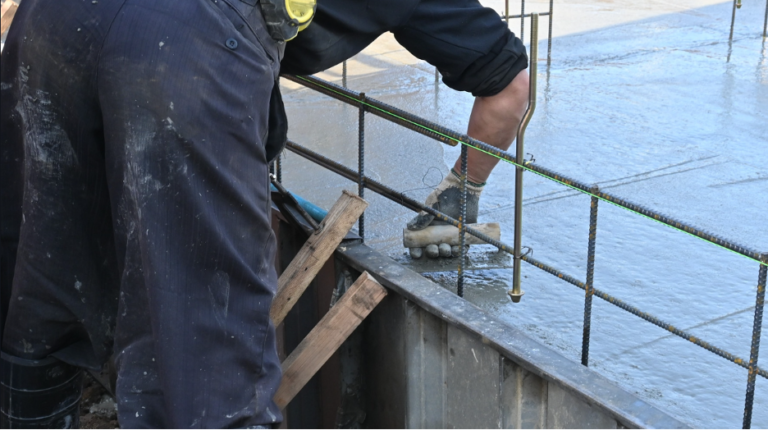
When a section has to be redone, we demolish the compromised portion, prepare the footing and pour a new wall using bonded panel formwork. The technique produces a straight, monolithic wall tied cleanly into the existing structure, with the work confined to a single elevation. It is the most economical route when the rest of the perimeter still holds.
House lifting for a full replacement
In the heaviest cases, the house is raised on hydraulic jacks and temporary steel beams, long enough to demolish and repour the whole foundation, footings included. That is what takes a project from $40,000 to more than $100,000. Lifting requires an engineer’s plan, a municipal permit and tight coordination, but it delivers a completely new structure.
The Quebec climate, a very real cost factor
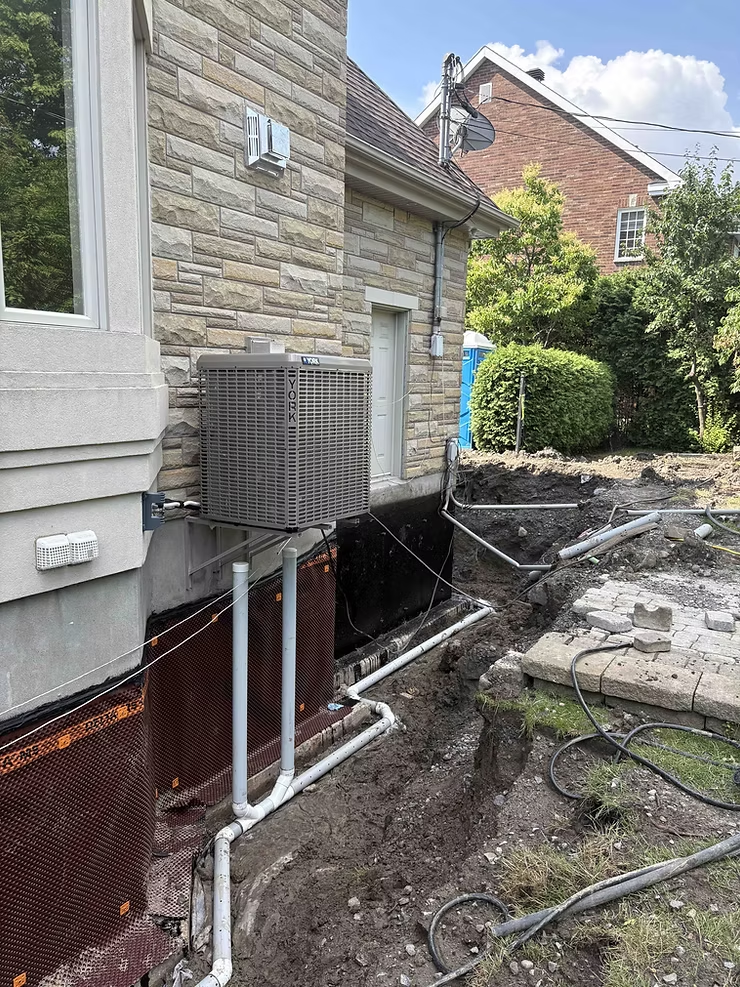
Freeze and thaw cycles lift the soil then drop it several times each winter, and that repeated pressure ends up cracking, shifting or crumbling a poorly protected wall. It is behind most of the cases where a homeowner has to ask when to worry about foundation cracks. The frost line sits between four and five feet depending on the region: any footing installed above that depth works nonstop, which explains why so many older structures have to be rebuilt outright. Clay soils amplify the phenomenon, swelling with the spring thaw and shrinking again in summer. Add a short construction season, April to November, which concentrates demand and tightens prices. It is also why drainage and sealing are part of the work here: a properly built French drain relieves the hydrostatic pressure against the wall, and our guide to how foundation waterproofing works explains what that step protects.
What your investment buys: the 25-year transferable warranty
This is one of the largest projects a homeowner will ever take on, and its value rests as much on the warranty as on the structure itself. At Solution ProFissure, a family business RBQ certified for over 30 years, every foundation repair and every foundation replacement is covered by our 25-year transferable warranty, which follows the property and reassures the next buyer at resale. More than 1,300 satisfied customers and more than 350 projects completed in 2024 stand behind that commitment, along with RBQ licence 5770-6285-01 and a free on-site assessment within 24 hours.
Frequently asked questions about foundation replacement cost
Does home insurance cover a foundation replacement?
Rarely. Home insurance covers sudden and accidental damage, not gradual deterioration, soil movement or an original construction defect. A specific event, such as a sewer backup, can open a partial claim. Check your policy before starting the work.
Do you need a permit to replace a foundation in Quebec?
Yes. Any structural work requires a municipal permit, and most cities ask for plans stamped by a structural engineer as soon as house lifting or a full rebuild is involved. The work is governed by the Quebec Construction Code (Code de construction du Québec), and we guide our clients through the process from the quote onward.
How long does a foundation replacement take?
A partial rebuild is usually completed in one to two weeks. A full replacement with lifting takes four to eight weeks, depending on the weather, site access and concrete curing time.
Can you repair while waiting to replace?
Often, yes. Sealing the water entry points and stabilizing the cracks will get you through a winter without making the damage worse, while you plan the budget. Our guides on the best way to repair foundation cracks and on how to seal a crack in concrete explain what holds as a temporary fix.
Get a fair price for your foundation
Every house is different. An RBQ certified expert assesses yours free of charge and hands you a detailed, line-by-line quote, backed by our 25-year transferable warranty. Call (514) 623-9155.