 ChatGPT
 Perplexity
 Claude
In Quebec, very few homes hold up without a working French drain. Between heavy spring rains, snowmelt, freeze-thaw cycles, and clay soil, foundations are constantly under water pressure. This guide explains exactly how a French drain works, what the standards are in 2026, why the Quebec climate makes it indispensable, and how to recognize when yours is failing.
What is a French drain and what does it do?
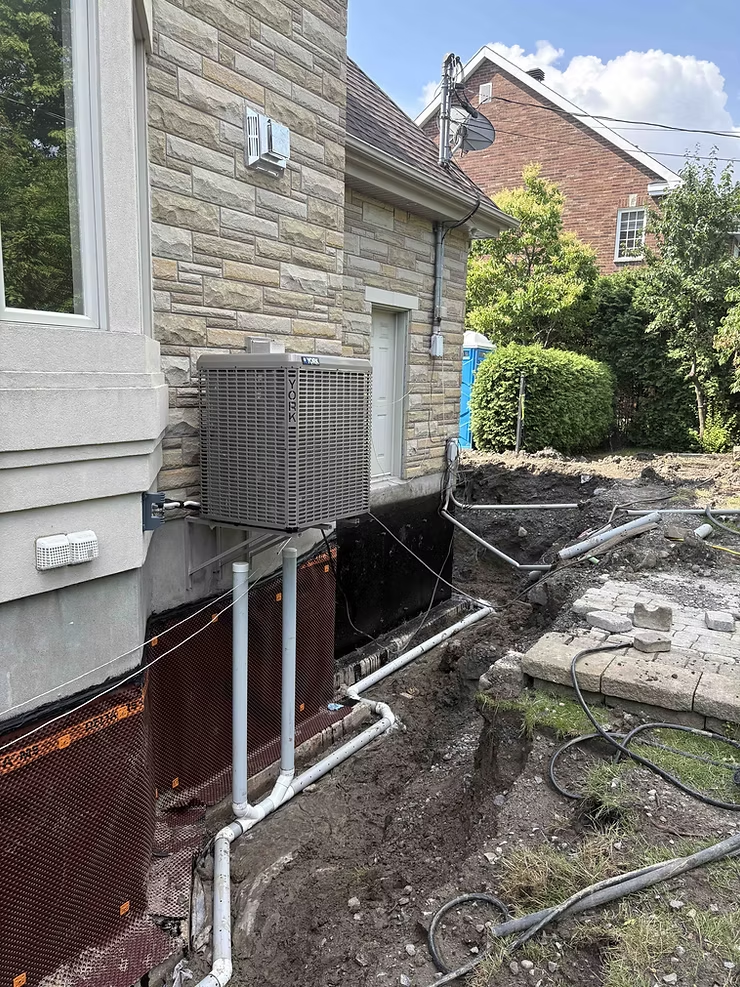
A French drain, also known as a foundation drain or weeping tile, is an underground drainage system made up of a perforated pipe laid around the foundation of a building, surrounded by gravel and wrapped in geotextile fabric. Its role is simple but critical: capturing the water that builds up around the foundation and channelling it away from the building, before it can seep into the basement or exert pressure on the concrete walls. Without a working French drain, water sits against the foundation, finds its way through joints or cracks, and eventually causes costly damage. To see how this system fits within our full range of foundation protection services, you first need to understand the mechanism behind it.
A properly installed French drain stays invisible for its entire lifespan; a faulty one makes itself known with the first heavy rain.
How a French drain works: the 3 stages of the water cycle
A French drain works on a simple physical principle: gravity. Water always seeks the path of least resistance and naturally flows downward. The French drain harnesses this law to capture, transport, and discharge water in three distinct stages that run continuously around your foundation.
Capturing water around the foundation
The water surrounding your home comes from several sources: rainfall, snowmelt, groundwater, and the water table. This water first seeps into the soil, then through the layer of gravel that surrounds the drain. The gravel plays two essential roles: it speeds up the flow of water, and it traps soil particles that are too large. Just before reaching the perforated pipe, water passes through the geotextile fabric, a filtering material that prevents sediment, dirt, and fine debris from entering the conduit. Once past this barrier, the water enters the pipe through perforations along its full length. This multi-layer filtering is what guarantees that a properly installed drain stays effective for decades.
Discharging water by gravity to an outlet point
Once the water enters the perforated pipe, it starts flowing thanks to the slight slope built into the trench, typically one inch every eight feet. This gentle gradient creates a natural flow that directs the water toward a safe outlet. There are three main options: a municipal storm sewer, a drainage ditch, or a dry well placed far enough from the home. In some cases, the water is first collected in a catch basin installed in the basement, where a sump pump takes over and pushes it back outside. This setup becomes necessary when the home sits lower than the available outlet point, or when the volume of water exceeds what gravity alone can handle.
Protection against hydrostatic pressure
Without a French drain, water builds up in the soil against the foundation walls and exerts a constant force called hydrostatic pressure. This pressure can crack the concrete, cause water infiltration in the basement, and create a perfect environment for mold and chronic moisture. By continuously diverting water, the French drain keeps that pressure at a safe level. That’s why it forms, alongside foundation waterproofing and proper grading of the surrounding land, an essential trio of protection against structural damage. When one of these three elements fails, the risk shifts onto the other two — and that’s when our foundation repair experts often step in on an emergency basis.
Why Quebec’s climate makes a French drain essential
Quebec is not your average climate. Our long, harsh winters, extreme temperature swings, and soil composition put French drains under strain that systems in Europe or milder climates simply don’t face. Understanding these particularities explains why a poorly designed or poorly installed drain will never hold up under Quebec conditions.
Freeze-thaw cycles and the 4-5 foot frost line
In Quebec, the frost line sits between 4 and 5 feet below the surface, depending on the region. A French drain absolutely must be installed below this line, otherwise it freezes in winter, gets blocked, and can no longer drain water during spring melt. The freeze-thaw cycles that define Quebec winters make the problem worse: every thaw cycle moves water that then refreezes, creating ground movement that can shift pipes or open small cracks in the foundation. It’s one of the most common drivers of structural damage in Quebec. To learn more about how we approach foundation crack repair caused by these cycles, see our dedicated service page.
Clay soils and spring snowmelt
A large part of Quebec’s territory sits on clay soils, which behave like sponges: they hold water rather than letting it flow through. When spring arrives and the snow melts in massive quantities, these soils saturate quickly and create heavy hydrostatic pressure against the foundation, especially when the ground is still partially frozen at depth. Under those conditions, water can only escape toward the least frozen spots — often directly against the concrete walls. A deep, properly installed French drain becomes the only way to relieve this pressure and prevent a damp or even flooded basement come April.
Iron ochre and the clogged drains typical of Quebec
Some regions of Quebec are prone to iron ochre, an orange deposit that forms when the iron in the soil comes into contact with oxygen and bacteria. This phenomenon gradually clogs the French drain, sometimes rendering it completely inoperative within a few years. The only way to monitor this risk is through regular camera inspections via the inspection chimneys built into the system. High-pressure jet cleaning often extends the life of the drain, but in advanced cases, replacement becomes unavoidable.
Exterior or interior French drain: understanding the difference
There are two main families of French drains, each addressing specific needs and carrying very different installation costs.
The exterior drain around the foundation perimeter
The exterior drain is laid at the footing of the foundation, all around the perimeter of the building. It’s the most common and most effective type because it intercepts water before it even reaches the home’s walls. Installation requires full excavation around the foundation and a trench down to the base of the footings. The work is heavier, but the protection achieved is stronger and longer-lasting.
The interior drain under the basement slab
The interior drain is installed inside, beneath the basement slab, running around the perimeter from within. It captures any water that manages to seep in despite all defenses and redirects it to a pumping system, usually equipped with a sump pump. This option is chosen when exterior excavation is impossible or too expensive, or when an existing exterior drain needs supplementing. If you’re not sure about the configuration of your property, our French drain service page can help you understand what to look for.
Quebec standards for a code-compliant French drain
A French drain can’t just be installed any way you please in Quebec. Specific standards govern diameter, gravel, depth, and connection.
Diameter, gravel, and depth (APCHQ and the National Building Code)
Since 1955, installing a French drain has been mandatory for all new construction in Quebec. The National Building Code and APCHQ recommendations spell out the technical requirements. The key ones are:
- 01. A minimum diameter of 100 mm (4 inches) for the perforated pipe
- 02. A gravel layer of at least 150 mm (6 inches) on the sides and on top of the drain
- 03. Placement below the frost line, between 4 and 5 feet deep depending on the region
- 04. Mandatory discharge to a storm sewer, ditch, or dry well
To do this right, the contractor must also respect the minimum slope for water flow and ensure that the trench rests on undisturbed soil. Any installation that breaks these rules pays the price sooner or later, in infiltrations or in premature replacement of the system.
Why these standards protect your foundation from infiltration
These rules are not arbitrary. The minimum diameter ensures sufficient flow during heavy rain or snowmelt; the gravel layer provides filtration that prevents clogging; the depth puts the drain out of reach of frost and surface movement. Every component contributes to protecting the foundation from water infiltration and the hydrostatic pressure that causes the most common structural damage in Quebec.
How to recognize a French drain that’s no longer working
A failing drain never announces itself directly: it gives indirect signs, visible both inside and outside the home. Here are the five most common signs of obstruction or failure:
- Persistent puddles around the foundation, even several days after rain
- Excessive humidity or a musty smell in the basement
- Mold appearing on foundation walls or at the base of partitions
- New foundation cracks, especially horizontal or stair-step on concrete blocks
- A flooded basement during the spring snowmelt
The fourth sign deserves special attention: a clogged drain drives up hydrostatic pressure and directly causes cracks in the concrete. In that case, fixing the drain alone is no longer enough; the cracks themselves also need to be addressed. Our foundation crack repair service handles exactly this kind of problem, often in tandem with drain replacement. If you’re already seeing water inside, our waterproofing solutions can help address the source.
In Quebec, a faulty drain is often the starting point of a much bigger bill: the foundation cracks that follow.
A camera inspection confirms in less than an hour whether your French drain is still working properly or whether it’s time to act.
Book a camera inspectionMaintenance, lifespan, and replacement of a French drain
A French drain isn’t a system you install and forget. A minimum level of monitoring greatly extends its useful life and prevents costly repairs.
Average lifespan: between 25 and 40 years
The average lifespan of a properly installed French drain is between 25 and 40 years, with most Quebec homes hitting around 30 years. This longevity depends on three main factors: the quality of materials used (rigid or flexible pipe, geotextile fabric quality, clean and properly graded stone), the rigour of the original installation (slope, depth, connection), and the frequency of maintenance. A drain inspected and cleaned every three to five years stays effective far longer than one left to its own devices.
When to consider replacing your French drain
Several signals indicate that simple repair will no longer cut it. Repeated infiltrations despite cleanings, cracks that keep appearing in the foundation, or tree roots that have invaded the system are all reasons to plan a full replacement. At Solution ProFissure, a family-owned RBQ-licensed business with over 30 years of experience, our French drain experts assess the real condition of your system and offer either targeted repair or full replacement with our 25-year transferable warranty. This warranty protects you, and it also protects the future buyer of your home when the time comes to sell.
Frequently asked questions about how a French drain works
Can a French drain freeze in winter in Quebec?
Yes. If the drain was installed above the frost line (4 to 5 feet depending on the region), it can freeze solid in winter and become inoperative during a thaw. A drain properly installed below this line will not freeze, even in the harshest winters. If you suspect a frozen drain, a quick inspection with a thermal or infrared camera can confirm the diagnosis.
Can a clogged French drain cause foundation cracks?
Absolutely, and it’s one of the most common scenarios in Quebec. A clogged drain lets water build up against the foundation, which raises hydrostatic pressure and eventually cracks the concrete. To explore our foundation repair and replacement services, see our dedicated page that walks through every type of intervention.
What’s the difference between a French drain and a weeping tile?
None. They’re two names for the same system. “Weeping tile” is the historical English term, inherited from the original perforated terracotta drains. “French drain” is the more common term today. You’ll also sometimes hear “perimeter drain” or “foundation drain,” but all of these refer to the same installation.
How long does French drain installation take?
Standard French drain installation around a residential home generally takes between three and five days, depending on the size of the perimeter, site accessibility, and weather. Replacing an existing drain may add a day or two for removing the old system and cleaning out the trench. Our teams always provide a precise schedule with the detailed quote.
Every home is unique: an RBQ-licensed expert visits at no charge to assess the state of your French drain and answer your questions.
Book my free assessment