 ChatGPT
 Perplexity
 Claude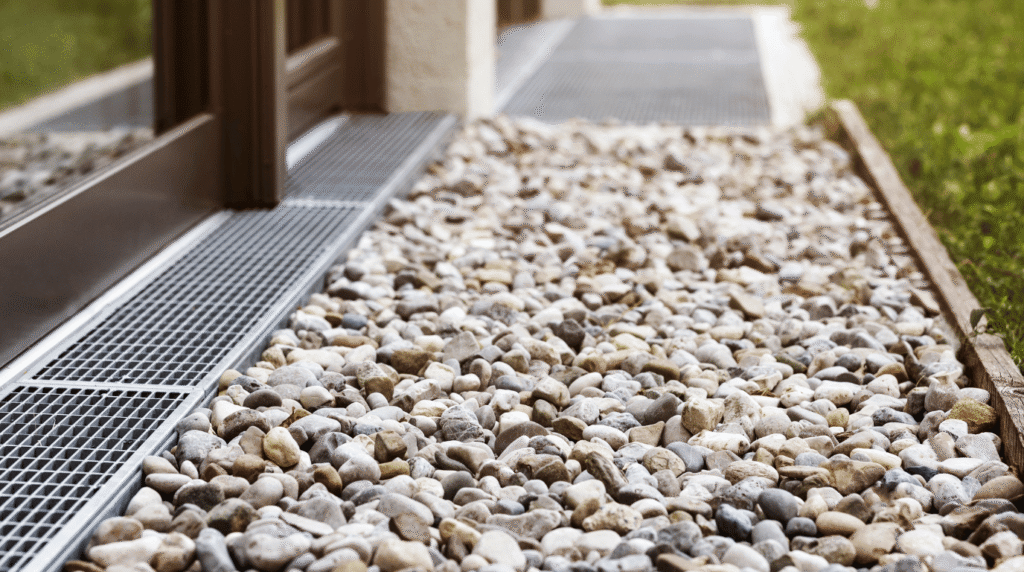
In Quebec, a French drain generally costs between $100 and $250 per linear foot, which represents a total cost of $12,000 to $20,000 for a standard single-family home. It is a major investment, but an essential one to protect your foundation from water. This guide breaks down real 2026 prices, the difference between installation and replacement, the factors that make the bill vary, and everything you need to budget for, whether you are in the Laurentians, in Laval, in Lanaudière or in Montreal.
How Much Does a French Drain Cost in Quebec in 2026?
The question comes up constantly among homeowners dealing with a damp basement: how much does a French drain really cost? The honest answer is that it depends on several variables, but the price ranges observed in Quebec in 2026 make it possible to plan a realistic budget. Here are the concrete numbers, no runaround.
The Price Per Linear Foot
The cost of a French drain is almost always calculated per linear foot, meaning according to the length of trench to excavate around the house. In 2026, this rate generally falls between $100 and $250 per linear foot, depending on the complexity of the job. When foundation waterproofing is added, the price often climbs toward the higher end of that range. An average home has a perimeter of 120 to 165 linear feet, which already gives an idea of the scale of the investment.
The Total Cost for a Single-Family Home
Once labour, excavation, materials and waterproofing are added together, the total cost of a French drain for a standard single-family home falls between $12,000 and $20,000 before taxes. Simpler projects can come down to around $10,000, while complex jobs, with clay soil, obstructions or the presence of rock, can exceed $25,000. At Solution ProFissure, we believe in transparency: a detailed quote should always break down every item, so you know exactly where your money goes.
Installation or Replacement: Why the Price Changes
People often talk about the “cost of a French drain” as if it were a single thing, but the price varies enormously depending on whether you are installing a new drain or replacing an existing one. The difference comes down to the complexity of the excavation work.
The Price of an Installation in New Construction
During new construction, installing a French drain generally costs less, because the excavation around the foundation is already part of the project. The drain is laid at the foundation footing before backfilling, without having to dismantle anything. Since 1955, this installation has in fact been mandatory for all new residential construction in Quebec, in accordance with the building code.
The Price of Replacing an Existing Drain
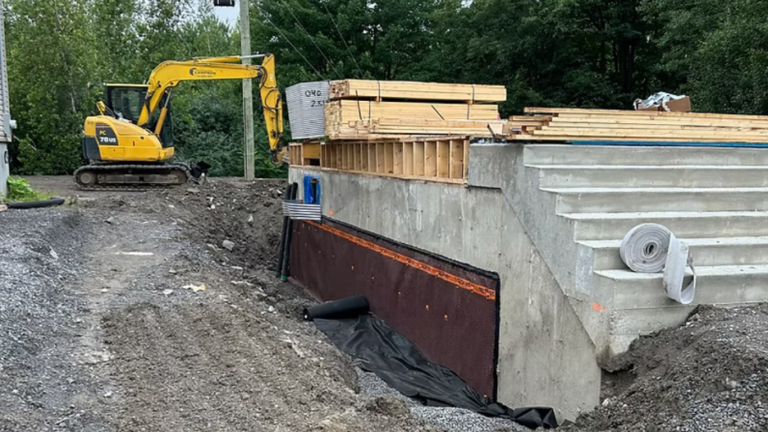
Replacing a failing French drain costs more, because you have to excavate all the way around a foundation that is already in place. The old perforated pipe, often clogged with iron ochre, sediment or roots, must be removed before installing the new system with gravel and geotextile so it can once again channel groundwater away from the foundation. This excavation around an occupied home involves more risk and more precautions, which explains the higher price. Our French drain service experts always assess the true condition of the system by camera before recommending a targeted repair or a full replacement.
A French drain is an investment counted in thousands of dollars, but it protects a structure worth hundreds of thousands.
The Factors That Influence the Cost of a French Drain
Why can two neighbouring houses receive French drain quotes at very different prices? Because several factors come into play and significantly change the final cost. Understanding them lets you better interpret your quote and avoid unpleasant surprises.
1. The Number of Linear Feet to Excavate
This is the number one factor. The larger your home’s perimeter, the longer the trench to excavate, and the higher the price. A large house with a long perimeter will necessarily cost more than a small bungalow, simply because there is more drain to lay and more soil to move.
2. The Depth of the Foundation and the Type of Soil
The deeper the foundation, the lower the trench must be dug, which increases the volume of excavation and the working time. The type of soil also plays a major role: clay, rocky or very compact soil takes much more effort to excavate than loose soil. The presence of rock can drive the bill up by several thousand dollars.
3. The Obstructions Around the House
A porch, a patio, an asphalt driveway, interlocking pavers, a fence or large trees complicate access and slow down the excavation. These elements sometimes have to be dismantled and then put back, which adds hours of labour and increases the cost. A yard that is easy to access for the excavator, on the other hand, reduces the bill.
4. The Waterproofing Work Included
Adding a foundation waterproofing membrane to the walls while the foundation is excavated represents an additional cost, but it is the best time to do it. This step can increase the price per linear foot by 15 to 25%, but it durably protects the concrete against moisture and extends the life of the system. Combining the two jobs avoids having to re-excavate later.
5. The Region and Site Accessibility
The cost of labour, of transporting materials and of disposing of excavated soil varies from one region to another. A locally established contractor, like Solution ProFissure in the Laurentians, limits travel costs for jobs in Saint-Jérôme, Sainte-Sophie and the surrounding area. How accessible the site is for machinery also directly affects the duration and the price of the work.
Interior or Exterior French Drain: What Is the Price Difference?
There are two main approaches to installing a French drain, and their cost differs depending on your property’s situation.
The Exterior Drain Around the Foundation
The exterior drain is laid at the foundation footing, all around the perimeter of the house. It is the most common and most effective type, because it intercepts water before it reaches the walls. Its price depends mostly on the depth of excavation and the obstructions to work around. It is the recommended solution in the majority of cases, because it protects the foundation from the outside and allows for waterproofing at the same time.
The Interior Drain Under the Basement Slab
The interior drain is installed inside, under the concrete basement slab. It is chosen when exterior excavation is impossible or too costly, for example when the yard is inaccessible or occupied by heavy structures. Be aware, however: part of the slab has to be broken up and rebuilt, which can be expensive. The price of a complete interior drain often falls between $15,000 and $25,000 depending on the size of the basement and the complexity of the installation.
The Related Work to Plan for in Your Budget
The price of the drain itself is only part of the equation. During a drainage project, several related jobs can be added to the bill, and it is better to budget for them from the start. Here are the most common ones:
- Foundation crack repair discovered during excavation, generally $450 to $900 per crack
- Window well installation for surface drainage, around $500 per unit
- Sump pump installation in the basement, roughly $1,600
- A drain in front of the garage door, around $1,750
- Connection to the sewer system, which can reach $7,000 depending on the configuration
If cracks are detected during the work, repairing them adds to the total. Our guide on foundation crack repair details the ranges according to severity, which helps you anticipate this potential expense.
Why Quebec’s Climate Makes the Price Vary
Quebec’s climate is not just a matter of comfort: it directly influences the cost of your French drain. Three climate realities specific to our region explain why our drains cost what they cost.
First, the frost line. In Quebec, it sits between 4 and 5 feet below the surface. A French drain must absolutely be laid below this line so it does not freeze in winter, which requires deeper, and therefore more expensive, excavation than in temperate climates. Next, clay soils, present throughout much of the Laurentians and Lanaudière, hold water like a sponge and are harder to excavate, which lengthens the duration of the work. Finally, iron ochre, that orange deposit common in certain regions, clogs drains prematurely and sometimes forces a replacement earlier than expected.
These conditions also explain why a failing drain raises hydrostatic pressure and can lead to a costly foundation repair. To understand in detail how a French drain works against freeze-thaw cycles, consult our complete guide on the subject.
Lifespan and Return on Investment
A well-installed French drain has a lifespan of 25 to 40 years, sometimes up to 50 years with regular maintenance. It is therefore a very long-term investment, one that pays off over decades. Seen from this angle, a cost of $12,000 to $20,000 spread over 30 years represents affordable protection for the structure of your home.
The return on investment does not stop there. A dry basement free of water infiltration preserves the value of your property, avoids the costly damage tied to mould and moisture, and reassures buyers at the time of a resale. At Solution ProFissure, a family business certified by the RBQ for more than 30 years, our transferable 25-year warranty comes with every drain installation and replacement. This warranty protects you, and it transfers to the next buyer of your home, which becomes a real selling point, something rather rare in the industry.
The true cost of a French drain is not measured at the time of the work, but over the thirty years during which your basement stays dry.
Frequently Asked Questions About French Drain Cost
How much does it cost to replace a French drain in Quebec?
Replacing a French drain in Quebec generally costs between $12,000 and $20,000 for a standard single-family home, or $100 to $250 per linear foot. The price climbs if the soil is clay or rocky, if obstructions have to be dismantled, or if foundation waterproofing is added. Only an on-site assessment can establish a fair price for your specific situation.
What is the price of a French drain per linear foot?
In 2026, a French drain costs between $100 and $250 per linear foot in Quebec. This rate usually includes excavating the trench, laying the perforated pipe, the gravel, the geotextile membrane and backfilling. Adding a waterproofing membrane to the foundation can raise the price by 15 to 25% per linear foot.
Does cleaning a drain cost less than replacing it?
Yes, much less. Cleaning a French drain by high-pressure jetting generally costs between $300 and $700, and up to $1,000 for heavily clogged systems. It is a maintenance solution that extends the life of the drain, but it does not fix a collapsed, broken or end-of-life drain. A camera inspection determines whether a simple cleaning is enough or whether a replacement is required.
Is the transferable 25-year warranty included in the price?
At Solution ProFissure, yes. Our transferable 25-year warranty is included in every French drain installation or replacement project, at no additional cost. It protects the current owner and transfers to the next buyer of the home, which makes it a concrete asset at the time of a resale. Always check the length and the conditions of the warranty offered before choosing a contractor, because they vary a great deal from one company to another.
Get a Fair Price for Your French Drain
Every home is unique: a free assessment by an RBQ-certified expert remains the only way to get an accurate, transparent price for your French drain.